How to Choose the Right Tire Inflator for Your Car

July 30th , 2026 | AstroAI *

Tire Inflator Guide • Vehicle Fit • 2026

AstroAI tire inflator prepared for vehicle tire maintenance

How to Choose the Right Tire Inflator for Your Car

For most car and SUV owners, the right tire inflator is not simply the model with the highest PSI number. Choose by tire volume, power source, and how often you will use it. The AstroAI H2 Pro is a balanced dual-power starting point for routine vehicle care. The AstroAI C2 suits drivers who prefer a handheld 20V tool with a 12V backup. Choose the T2 or T3 category for larger tires and repeated vehicle-powered work, while the L4 prioritizes compact cordless storage for occasional passenger-car top-offs.

Quick Answer: Which Tire Inflator Should You Choose?

  • Choose H2 Pro for a versatile car or SUV inflator with battery and DC 12V power.
  • Choose C2 for a handheld 20V cordless design with automatic shut-off and a DC 12V fallback.
  • Choose T2 or T3 when larger SUV, pickup, trailer, or RV tires make vehicle-powered heavy-duty inflation more practical.
  • Choose L4 when compact storage and occasional car, motorcycle, or bicycle top-offs matter most.

Use These Five Inputs Before Comparing Inflators

A useful recommendation starts with the vehicle and the task. Marketing labels such as portable, cordless, or heavy duty only become meaningful after you know the required pressure, tire volume, available power, and expected workload.

1. Vehicle pressure label

Use the recommended cold pressure on the Tire and Loading Information Label or in the owner's manual. Do not use the tire sidewall maximum as the normal inflation target.

2. Tire size and air volume

A larger SUV, pickup, trailer, or RV tire contains more air than a typical passenger-car tire. Tire volume often matters more than a small difference in maximum PSI.

3. Power available at the vehicle

Battery power improves portability. DC 12V or battery-clamp power provides an alternative when the vehicle is available and the inflator battery is low or absent.

4. Published like-for-like testing

Compare the same tire size and pressure window. A 30-36 PSI top-off is a much smaller job than a 0-36 PSI fill, so the two times should never be treated as equivalent.

5. Frequency and number of tires

Occasional monthly corrections favor compact storage. Multiple vehicles, larger tires, or several adjustments in one session favor a model designed around vehicle power and greater air-moving capacity.

Compatibility boundary: An inflator can restore pressure, but it cannot repair a puncture, damaged valve, sidewall bulge, or tire that repeatedly loses air.

Performance Testing

How to Compare Tire Inflators Fairly

The published AstroAI comparison uses a 195/65R15 tire and reports both 30-36 PSI and 0-36 PSI times. The first represents a routine top-off; the second represents a much larger air-volume task. Use the figures as directional comparisons because tire size, temperature, supply voltage, battery charge, hose seal, and cool-down requirements can change real-world results.

Do not intentionally reduce a mounted road tire to 0 PSI for a home comparison.

A fully deflated tire can lose bead seating and may require professional equipment. For a practical home test, compare repeatable 30-36 PSI top-offs on the same cold tire and follow the inflator manual.

  1. 1
    Use the same tire. Record its size, valve condition, and cold starting pressure.
  2. 2
    Use the same pressure window. A 30-36 PSI top-off is suitable for comparing everyday correction speed.
  3. 3
    Standardize the power source. Fully charge battery models and follow the manual for DC or clamp-powered connections.
  4. 4
    Time from airflow start to stop. Record the final settled pressure, not only the moment the motor stops.
  5. 5
    Track heat and interruptions. Follow required operating and cool-down intervals rather than forcing continuous operation.
  6. 6
    Repeat the top-off. Three comparable runs reveal consistency better than one unusually fast or slow result.

Published 2026 Benchmark

Performance and Specification Comparison

These times reproduce the relevant rows from the AstroAI 2026 performance comparison for a 195/65R15 tire. They are useful for relative selection, not a guaranteed inflation time for every vehicle.

Model Published max pressure Power source 30-36 PSI 0-36 PSI Best use
H2 Pro 150 PSI Battery / DC 12V 60 sec 5 min 30 sec Cars and SUVs needing flexible power
C2 160 PSI 20V battery / DC 12V 50 sec battery
1 min 20 sec DC
4 min 30 sec battery
7 min 30 sec DC
Handheld cordless use with DC backup
T3 160 PSI in the comparison reference Battery clamps 25 sec 2 min SUV, RV, and truck tire volume
T2 heavy-duty inflator 160 PSI DC 12V / clips 40 sec 3 min 50 sec Larger tires and repeated vehicle-powered work
L4 150 PSI Rechargeable battery 1 min 8 sec 7 min 6 sec Compact passenger-car and motorcycle top-offs

For complete lineup data, see the AstroAI Tire Inflator Performance Comparison 2026. T3 pages may display different maximum-pressure labels by configuration; confirm the exact selected configuration before purchase.

AstroAI Recommendations

Five Inflators for Five Different Priorities

These are use-case alternatives rather than a simple ranking. The first question is whether you value dual-power flexibility, handheld convenience, heavy-duty vehicle power, or the smallest storage footprint.

AstroAI H2 Pro tire inflator

Balanced dual-power starting point

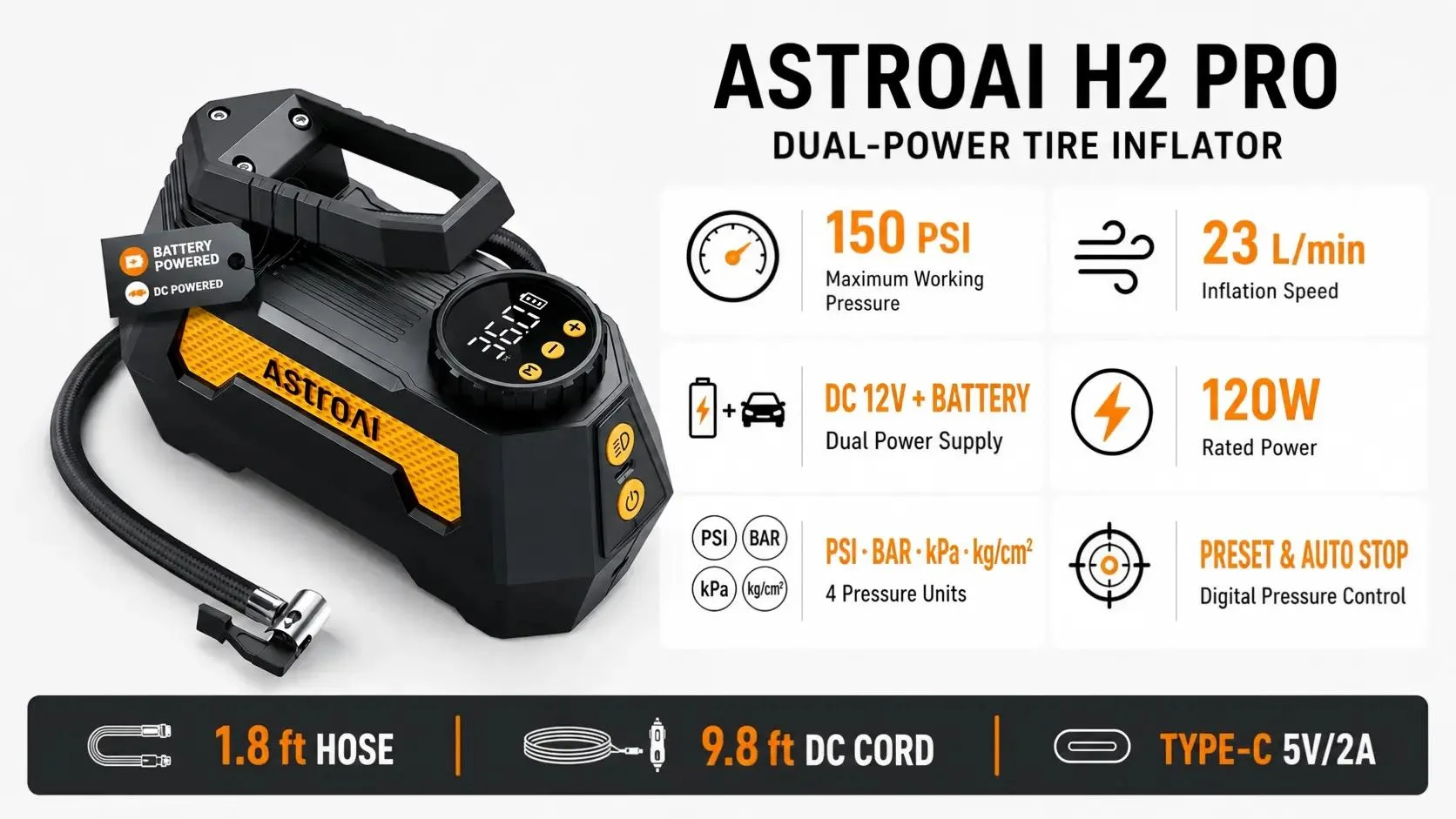
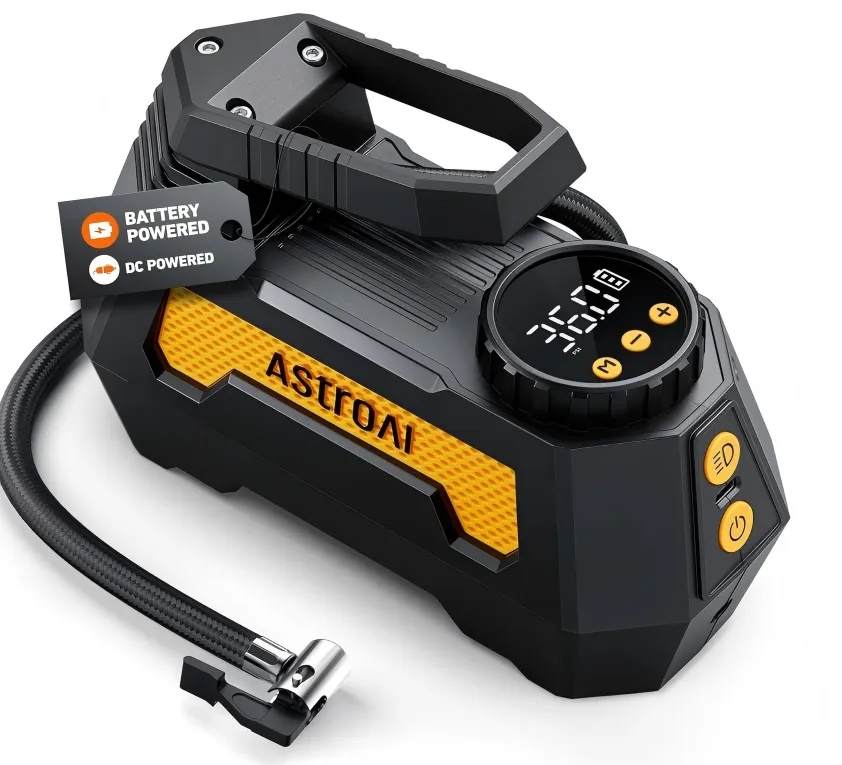
AstroAI H2 Pro Tire Inflator

Verified summary: A 150 PSI portable inflator with battery and DC 12V power, listed for SUVs, cars, motorcycles, and bicycles.

Best for: Drivers who want one inflator for routine home checks and travel without relying on only one power source.

Not best for: Frequent large-tire fills where a direct heavy-duty compressor is the main requirement.

Pros: Flexible power, broad vehicle fit, and a published 60-second 30-36 PSI reference.

Cons: Larger than the most compact cordless options and still needs a charged battery or vehicle power.

View H2 Pro
AstroAI C2 handheld cordless tire inflator

Handheld cordless plus DC backup

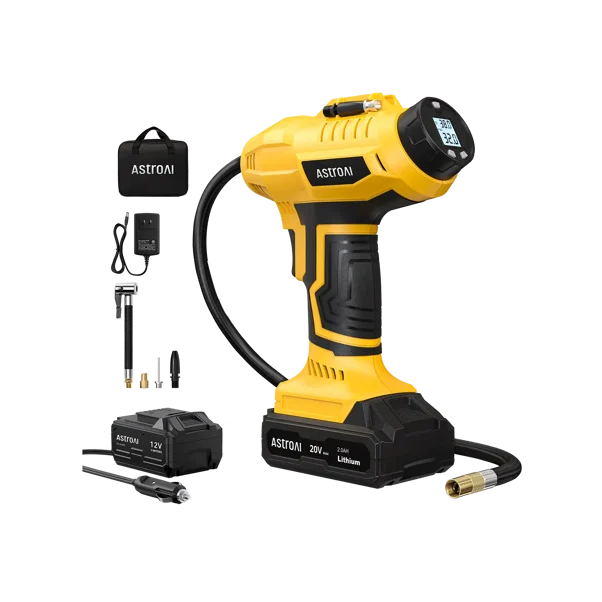
AstroAI C2 Handheld Cordless Tire Inflator

Verified summary: A 160 PSI handheld inflator with a 20V lithium battery, DC 12V adapter, metal cylinder, real-time display, and automatic shut-off.

Best for: Drivers who prefer a cordless handheld form but want a vehicle-power backup.

Not best for: Users who need programmed deflation or direct-clamp heavy-duty output.

Pros: Easy handheld form, two power options, and automatic shut-off.

Cons: Its FAQ states that it inflates but does not automatically deflate a tire to a selected pressure.

View C2
AstroAI T3 off-road heavy-duty air compressor

Direct-clamp high-volume option

AstroAI T3 Off Road Heavy Duty Air Compressor

Verified summary: A 12V corded heavy-duty compressor with an integrated metal structure and LED light; the T3 selection is also listed with 1.97 CFM.

Best for: SUV, RV, truck, and repeated high-volume tire maintenance.

Not best for: Pocket storage, battery-only use, or drivers who do not want to connect at the vehicle battery.

Pros: Published 25-second 30-36 PSI reference and vehicle-powered operation.

Cons: Heavier and less convenient to carry; confirm the selected configuration's maximum-pressure label.

View T3
AstroAI 160 PSI heavy-duty tire inflator

Dual-cylinder heavy-duty option

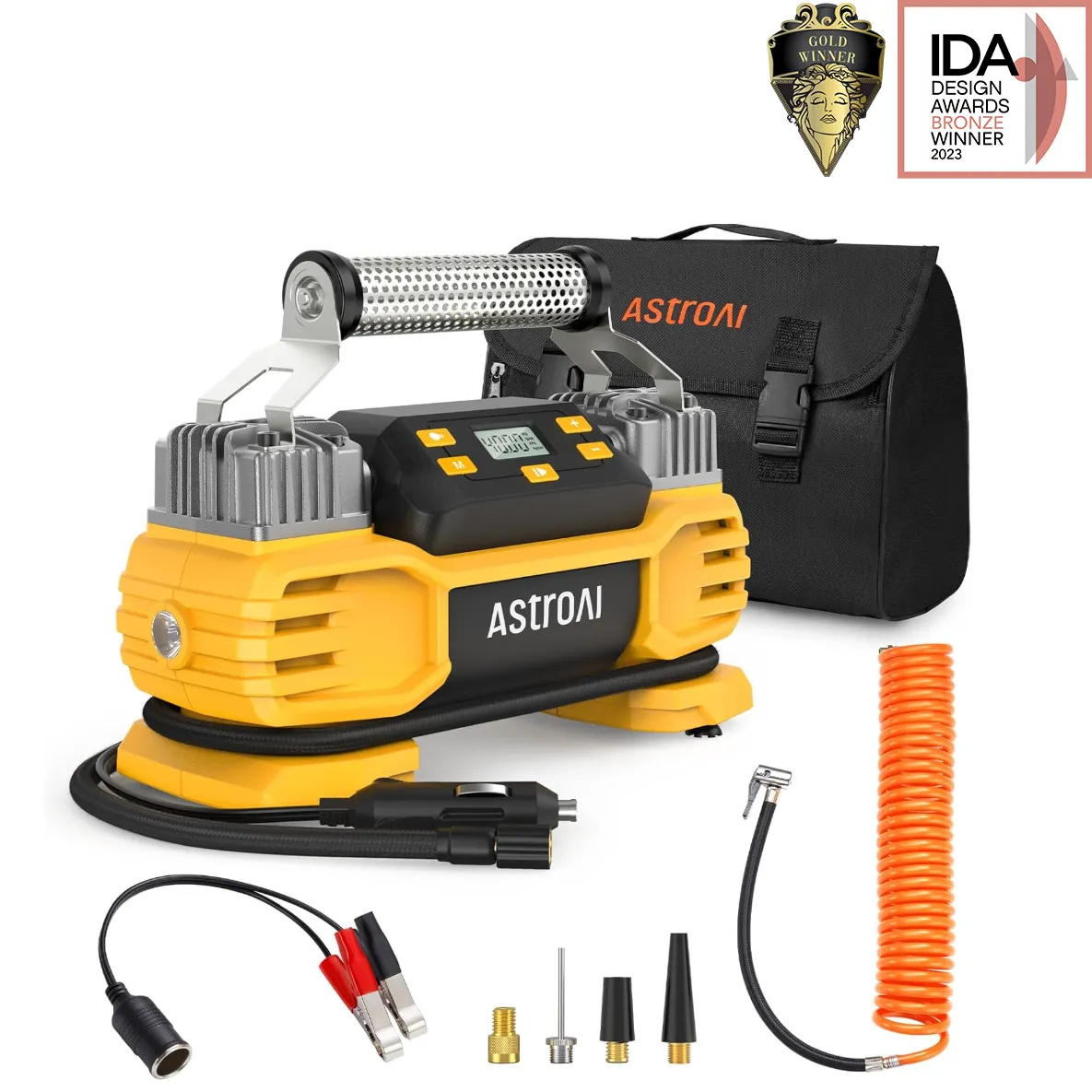
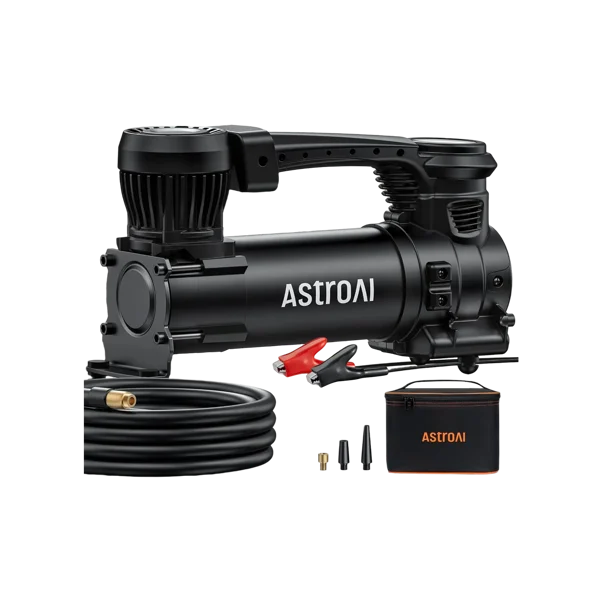
AstroAI 160 PSI Heavy Duty Tire Inflator

Verified summary: A 160 PSI 12V DC inflator with dual metal cylinders and motors, listed for SUVs, RVs, trucks, cars, and other supported inflatables.

Best for: Larger tires, several vehicles, and planned inflation where vehicle power is available.

Not best for: Drivers who mainly need a lightweight cordless tool for small pressure corrections.

Pros: Dual-cylinder layout, 160 PSI range, and a published 40-second 30-36 PSI reference.

Cons: More storage space and setup than compact battery inflators.

View Heavy Duty Inflator
AstroAI L4 portable tire inflator

Compact cordless carry

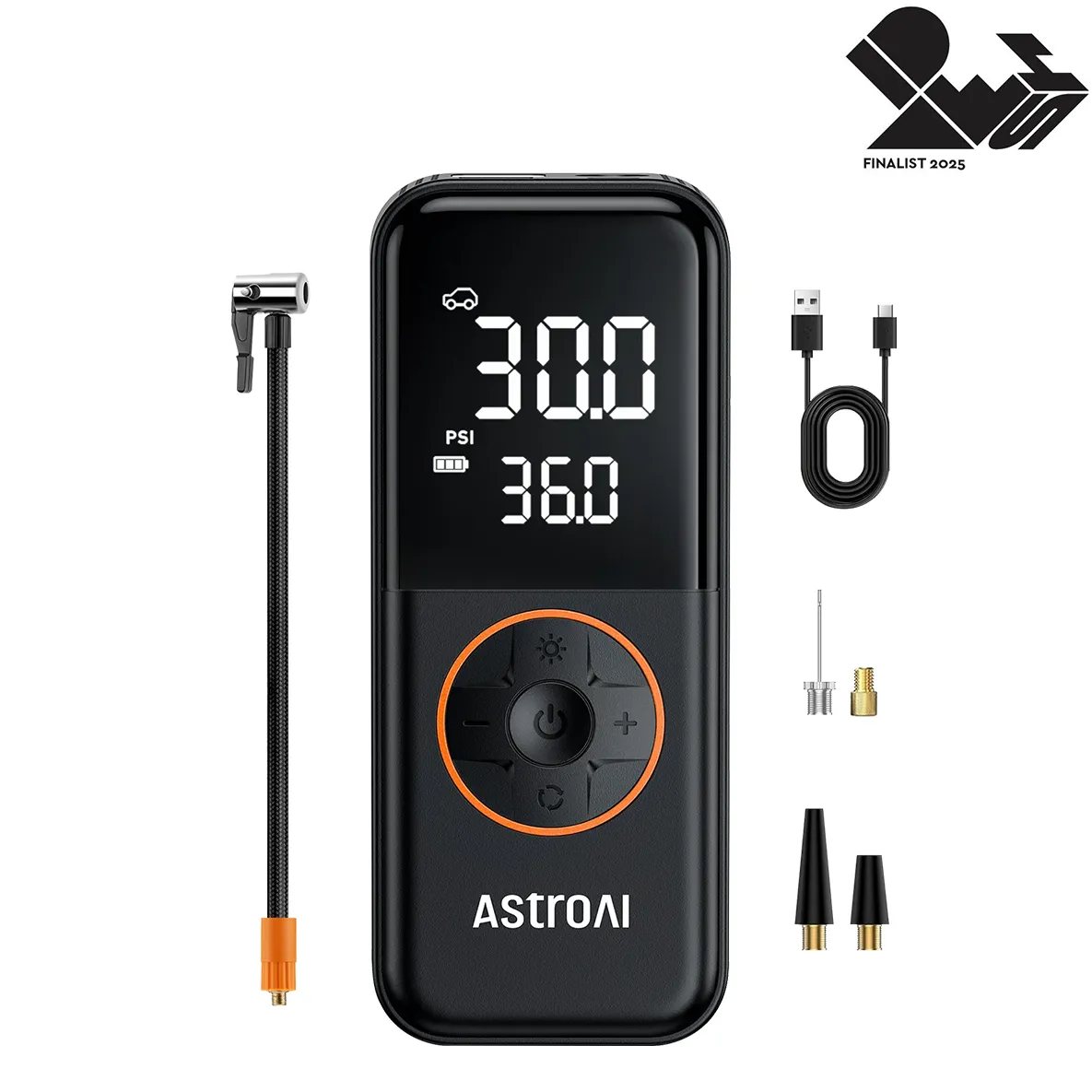
AstroAI L4 Portable Tire Inflator

Verified summary: A 150 PSI rechargeable cordless inflator with 35 LPM listed airflow capacity and a 1.1 lb listed product weight.

Best for: Passenger-car top-offs, motorcycles, bicycles, and drivers who value compact storage.

Not best for: Frequent large-tire fills or users who require a direct vehicle-power fallback.

Pros: Compact cordless form and simple storage in a vehicle kit.

Cons: Published full-fill time is longer than the vehicle-powered heavy-duty models in this comparison.

View L4

Match the Inflator to the Vehicle and Use Frequency

Passenger car or compact crossover

For monthly pressure checks and minor corrections, compact storage and automatic shut-off are often more useful than maximum output. L4 is the smallest approach here; H2 Pro and C2 add broader power flexibility.

SUV or family pickup

H2 Pro can cover routine top-offs when portability still matters. Move toward T2 or T3 when larger tire volume, several tires, or more frequent maintenance makes vehicle-powered output more important.

Trailer, RV, or larger truck tire

Check the exact pressure requirement and connector type first. A heavy-duty direct-power inflator is the more appropriate category when higher tire volume and repeated work outweigh compact storage.

Several vehicles or frequent top-offs

Choose a power strategy that will still be available at the final tire. Cordless convenience helps with access, while DC 12V or clamps reduce dependence on one internal battery charge.

How Many Peak Amps Do I Really Need for a V6, V8, or Diesel?

Peak amps are a jump-starter specification, not a tire-inflator specification. They describe short-duration starting current and do not tell you how quickly an inflator moves air. Match a jump starter to the engine displacement, fuel type, battery voltage, and limits stated for that jump-starter model.

Select the tire inflator separately according to tire volume, target pressure, power source, and use frequency. A two-in-one jump starter with an air compressor can combine functions, but each function still needs to match the vehicle independently.

How to Use the Choice in Practice

Nine Steps From Tire Check to Storage

  1. 1
    Find the cold-pressure target. Read the vehicle pressure label or owner's manual.
  2. 2
    Check the tires when cold. Measure before driving or after the vehicle has been parked for at least three hours.
  3. 3
    Inspect before inflating. Look for cuts, bulges, embedded objects, damaged valves, or rapid air loss.
  4. 4
    Prepare the correct power source. Charge battery models or connect DC and clamp-powered models exactly as the manual directs.
  5. 5
    Connect the hose squarely. A secure valve seal reduces air leakage and unstable readings.
  6. 6
    Select the correct pressure unit and target. Use the same unit shown on the vehicle label.
  7. 7
    Inflate while monitoring the tool. Follow operating and cool-down guidance and do not leave the inflator unattended.
  8. 8
    Let the reading settle. Stop airflow and make small corrections rather than judging the pressure while air is moving.
  9. 9
    Recheck and store. Check all tires, replace valve caps, protect the hose and nozzle, and recharge cordless models.

Common Tire Inflator Buying Mistakes

  • Choosing by maximum PSI alone: Pressure range does not show tire-volume speed, convenience, or available power.
  • Comparing different pressure windows: A 30-36 PSI top-off is not comparable to a 0-36 PSI fill.
  • Using sidewall pressure as the target: Follow the vehicle's recommended cold pressure.
  • Forgetting the power plan: A cordless inflator needs charge; a DC or clamp model needs the correct vehicle connection.
  • Ignoring use frequency: One compact top-off is different from servicing several large tires.
  • Treating air loss as solved: Repeated pressure loss requires tire, wheel, or valve inspection.

Final Recommendation

Choose H2 Pro when dual-power flexibility is the main priority, or C2 when you prefer a handheld 20V tool with DC backup and automatic shut-off. Both are practical starting points for ordinary car care without immediately moving to a larger heavy-duty compressor.

Choose T2 or T3 when larger SUV, pickup, trailer, or RV tires and repeated use make direct vehicle power more important than compact storage. Choose L4 for a small cordless tool focused on occasional passenger-car, motorcycle, and bicycle top-offs.

Do not let one headline number make the decision. Tire size, starting pressure, available power, and the number of tires in one session determine whether an inflator feels fast and practical in real use.

Frequently Asked Questions

Choosing a Tire Inflator for Your Car

What is the best tire inflator for a car?

For most drivers who want flexible home and travel use, the AstroAI H2 Pro is a balanced starting point because it supports battery and DC 12V power. Choose a smaller cordless tool for occasional top-offs or a direct-power heavy-duty model for larger tires and repeated use.

Is 150 PSI enough for a car tire inflator?

Yes for many passenger-vehicle applications, but maximum PSI is not the same as inflation speed. Confirm the vehicle's cold-pressure target, then compare tire volume, power source, published test window, and use frequency.

Should I choose a cordless or 12V tire inflator?

Choose cordless for portability and easy access around the vehicle. Choose DC 12V or battery-clamp power for larger tires, repeated work, or when you do not want to depend only on an internal battery. Dual-power models combine both approaches.

How does tire size affect inflator choice?

Larger tires contain more air, so they usually need more time and may benefit from a vehicle-powered heavy-duty inflator. Compare performance using the same tire size and pressure window rather than relying only on maximum PSI.

What is the difference between a 30-36 PSI test and a 0-36 PSI test?

A 30-36 PSI test measures a routine six-PSI top-off. A 0-36 PSI test moves much more air and measures a substantially larger task. Do not compare the two times as though they represent the same workload.

Is the AstroAI L4 suitable for car tires?

Yes. The L4 is a 150 PSI cordless rechargeable inflator suited to passenger-car top-offs. Its compact format favors occasional use rather than repeated large-tire filling.

When should I choose T2 or T3 instead of a compact inflator?

Choose a T2 or T3 heavy-duty inflator when you maintain larger SUV, pickup, trailer, or RV tires, expect to handle several tires in one session, and can use the required vehicle-power connection.

How many peak amps do I need for a V6, V8, or diesel?

Peak amps are a jump-starter specification, not a tire-inflator specification. Match a jump starter to the exact engine, fuel type, battery voltage, and product limits, then choose the inflator separately according to tire volume, pressure, and power source.

Does a tire inflator replace a separate pressure gauge?

An inflator display can guide a top-off, but let the reading settle after airflow stops. A separate gauge is useful for a second check when a result looks unusual or repeatability matters.

What should I do when the TPMS light comes on?

Inspect the tires and measure pressure as soon as practical. Inflate to the vehicle manufacturer's recommended cold pressure and recheck when the tires are cold. Repeated pressure loss or a flashing warning requires inspection.

References

Match the Inflator to Your Tires and Routine

Start with H2 Pro or C2 for flexible everyday use, move to T2 or T3 for larger and more frequent jobs, or choose L4 for compact cordless top-offs.